For dozens of residents living near so-called “Miller Lake” in west Volusia County, when it rains, it tends to flood.
It’s a problem exacerbated by what residents say is another problem: “Miller Lake” isn’t really a lake at all. It’s a couple dozen parcels of land, mostly private property owned by several residents. Despite that, the St. Johns River Water Management District issued stormwater discharge permits referring to the area as Miller Lake, which allow for two nearby strip malls to send excess stormwater there.
‘Chronic’ and ‘unabated’ flooding
There is no public water body named “Miller Lake” — at least not here, just south of Orange City.
About 13 miles northeast from here, in DeLand, there is a lake named Miller. But that known, named lake is not the water body causing problems for residents like David and Michele Kremer.
During Florida’s worst drought in over a decade, the marshy water historically known by residents as “Miller Pond” remained high, occupying nearly half of the Kremers’ 12 acres.
“This isn’t a lake; they've created this. This was not ever a lake,” Michele Kremer said.

The two adjacent lots the Kremers bought in west Volusia County in 2015 were supposed to be a peaceful refuge for the couple to enjoy their retirement, right in the same area where Michele grew up. Tucked away on a small road right off busy Route 17, the sprawling land made the Kremers feel like they’d found their own little slice of “old Florida” heaven, complete with a chicken barn and dozens of oak trees.
Now, the Kremers say, somewhere between 70 and 80 of those trees are dead because of the flooding this land has endured. The barn was destroyed during Hurricane Milton, along with the mobile home on the property where the couple initially lived (and, later, their daughter).
The Kremers understand they would’ve likely had to endure some flooding from Milton no matter what. But they blame the strip malls’ permitted stormwater discharges to their property for intensifying the flooding.

“It’s not inhabitable anymore,” Michele said. “We can't live like this. We didn't pay for this. You're paying taxes on stuff that you can't even use.”
The Kremers blame the persistent flooding and standing water on irresponsible and unlawful stormwater management enabled by area regulators: namely, the county and St. Johns River Water Management District.
Together with nearly two dozen other co-plaintiffs, the Kremers are waging a class action lawsuit over the allegedly mismanaged stormwater. “Artificial drainage alterations” sending stormwater to the so-called “Miller Lake” in the Kremers’ backyard have resulted in “chronic,” “unabated” flooding, according to the amended complaint filed earlier this year.
The flooding has damaged property, destroyed a local business and, in at least one case, delayed first responders from providing necessary medical care for a resident, according to the lawsuit.

‘An existing deep marsh’
Historically, area residents say, the standing water just south of Miller Road was known as “Miller Pond.” The marshy area would intermittently drain and flood, not every year but seasonally, according to public records kept by the St. Johns River Water Management District.
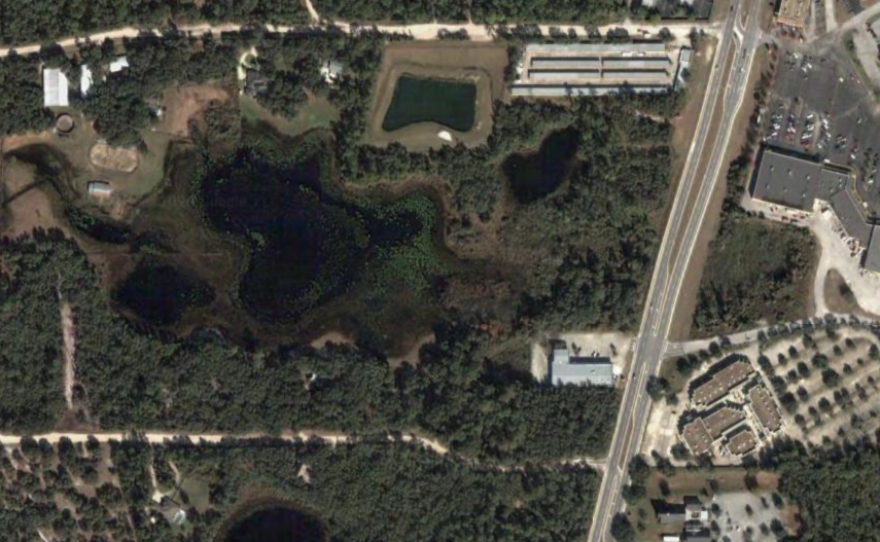
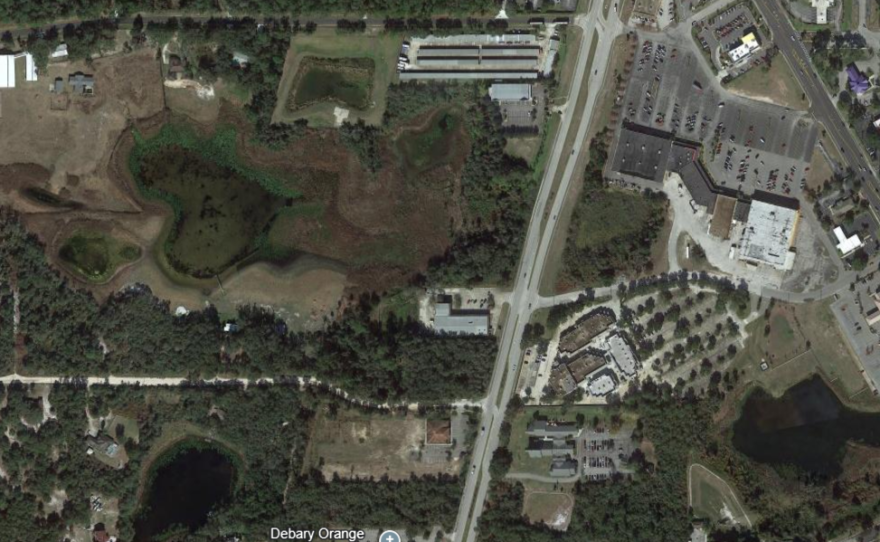

So-called “Miller Lake” is not publicly owned and is not a lawful stormwater outfall, according to the lawsuit. It does not appear on the Florida Department of Environmental Protection’s map cataloguing the state’s more than 4,000 lakes.
Yet “Miller Lake” is where private companies tied to two nearby strip malls sought — and received — permission to send their stormwater runoff back in 2017, according to permit applications approved by the water management district.
The district has also approved Volusia County’s past applications for permits to create more flood storage by re-grading parcels of land along so-called “Miller Lake.” A technical staff report completed by the district in 2012 refers to Volusia’s proposed “expansion of Miller Lake, an existing deep marsh.” The same report also calls “Miller Lake” a “deep marsh-pond.”
Although ponds are generally considered to be smaller and shallower than lakes, and tend to allow for greater light penetration, no universally-recognized scientific definition firmly differentiates between the two water body types.
For area residents involved in the ongoing lawsuit, the pond-or-lake question is besides the point. What matters and is undeniable, according to their attorneys: “Miller Lake” is not a publicly-accessible water body.
Rather, “‘Miller Lake’ is composed of impounded stormwater on a number of the Plaintiffs’ private backyards,” according to the lawsuit.
Two strip malls, one ‘unlawful drainage configuration’
Stormwater runoff from the strip malls gets channeled to a pipe that releases the water onto a vacant commercial lot of just under three acres on Route 17, kitty-corner to the Kremers’ land, according to the lawsuit. The lot is owned by Vionnette Guardiola-Hernandez and her husband, Maikel Hernandez.

The couple bought the lot in 2010 with hopes of eventually developing it. Now, they say they don’t think that will be possible, due to how much stormwater this land has taken on, year after year.
“It's been destroyed, from all the water (that’s) been pumping in here,” Hernandez said.
The inundation of stormwater has altered the land, rendering it less appealing for potential buyers, the couple said, citing two previous sales that were in progress but fell apart following environmental reviews. A professional wetlands surveyor told the couple a culvert installed to release stormwater onto the land has destroyed the “whole entire property,” Hernandez said.
When they bought the lot, the couple estimates about 20% of it consisted of wetlands. Now wetlands take up about 90% of the lot, according to the survey.
“We were told that, hey, only a tenth (of the lot’s acreage) is buildable,” Hernandez said, following the survey.

The lawsuit blames the flooding issues on two strip malls right across the road from the Hernandezes’ lot, on the other side of Route 17.
Specifically, the complaint names seven companies linked to the strip malls: four tied to the Royal Oaks Professional Centre, and three to the Four Townes Shopping Center. No legal representatives for any of the seven companies opted to comment for this story.
According to the lawsuit, the strip malls’ owners coordinated to link the two plazas’ respective stormwater management systems together, ultimately merging them into one “interconnected and unified” system. The integrated system sends stormwater from both plazas through a series of drainage structures and pipes, ultimately routing the “combined stormwater discharges” to a culvert which dispenses the water directly onto the Hernandezes’ property.

In designing a system that collects and concentrates together stormwater runoff from each plaza, the complaint argues, companies linked to Four Townes and Royal Oaks have “substantially altered the natural flow and drainage patterns that existed prior to this development.”
“The resulting flooding is not a single completed injury, but a continuing trespass and continuing nuisance that recurs with each storm event and persists so long as the unlawful drainage configuration remains in operation,” according to the lawsuit.
Stormwater permits and sovereign immunity
On permit applications, the water management district asks applicants to confirm to which “receiving water body” the anticipated stormwater discharges will ultimately flow. Companies linked to Royal Oaks and Four Townes identified the receiving water body as: “Miller Lake.”
Really, the strip malls’ combined system ultimately discharges onto the Hernandez lot: “a privately owned parcel of land not authorized to receive concentrated stormwater discharges,” according to the lawsuit. The lawsuit argues the strip malls “mischaracterized” the nature of the outfall, hiding the fact it really discharges onto private land.
But in a motion filed earlier this summer, Four Townes pushed back, arguing that ultimately, the responsibility falls on government regulators.
“If Four Townes owed Plaintiffs a duty not to use the nomenclature ‘Miller Lake,’ then Volusia County and the (St. Johns River Water Management District) owed Plaintiffs the same duty,” the court filing reads. “The use of the ‘Miller Lake’ nomenclature originated, was approved, and was used before by others before the events described.”

The lawsuit names only private companies as defendants, no governmental entities — even though the water management district approved permits to send stormwater to so-called “Miller Lake.”
Successfully suing the government is an incredibly tall order, according to Jack Taylor, the trial attorney on Morgan & Morgan’s business litigation team heading up the lawsuit. “As far as issuing a permit or something like that, it's very difficult, or even impossible to get them for that.”
The challenge arises from a legal doctrine not unique to Florida — known as sovereign immunity, which essentially means the government cannot be sued without its own permission.
Florida law specifically forbids any legal action brought against the state to seek “the recovery of damages caused by the partial or total failure of any stormwater management system,” including by way of a permit approval.
RELATED: How sovereign immunity makes it hard to sue the government
A spokesperson for the water management district declined an interview request for this story, citing notice the district had received of the ongoing lawsuit. They also opted not to answer emailed questions about how the district identifies and/or designates water bodies generally, and whether or not so-called “Miller Lake” is a public water body.
A Volusia County spokesperson also declined a request for comment, writing by email: “We are unable to comment on potential, pending, or current litigation, other than to note that we find no basis to support any claims against the County of Volusia in this matter.”
Property owners’ ongoing lawsuit seeks to recoup damages they “have suffered and will continue to suffer” as a result of the “chronic” flooding. Ultimately, though, the larger goal is simply to stop the flooding issues allegedly being caused by mismanaged stormwater.
“It's property rights,” Taylor said. “They have all their money invested in this real estate, and they own it. It's their biggest investment.”

‘Not an act of nature’
On the Kremers’ land, a line of fence posts vanishes into so-called “Miller Lake.”
A family that used to keep their goats on part of the Kremers’ land put up the fence years ago, the Kremers said, to keep the goats away from the water. Ultimately, the water got too high, and the goats had to go — along with the income the Kremers used to receive for leasing out their land.
“It's not really about the money for us as much as it is about getting this water out of here and having this controlled,” Michele Kremer said. “It's gotta stop. They can't keep using us as their water pit.”
Other residents who are part of the lawsuit share the same sentiment: they just want the flooding issues to stop.
If more stormwater retention ponds are needed in the area, the Hernandez couple said, their lot could certainly serve as one — but ideally not for free, the way it’s currently being used.
The couple would gladly sell the lot to a government regulator or one of the strip malls for a fair price, ideally something close to market value, Vionnette Guardiola-Hernandez said. “You obviously need this property. You're using it to dump water onto my property. Then buy it from us, and solve your issue.”
Another source of frustration for these residents is the repetition of a common line they say they keep hearing from government regulators, particularly the county, whenever they’ve raised concerns.
“What they said was, it was an act of God. It was nature,” Guardiola-Hernandez said. “That's not an act of nature. The rain was. But you putting a pipe and flooding my property, that's not an act of nature.”

Human-driven climate change is driving up global temperatures at an “unprecedented rate” not seen in the last 10,000 years, according to NASA. As the Earth warms, the atmosphere is holding more moisture, allowing for the release of more precipitation during hurricanes and other heavy rain events.
Without making mention of climate change, a page on Volusia County’s website dedicated to excessive rainfall acknowledges that, in the last two decades, higher annual rainfall in the county is contributing to rising regional flood risks.
Regardless, residents insist, government regulators could be doing more to try and mitigate flooding issues — including by taking more proactive steps to ensure stormwater is being managed responsibly.
“They go, ‘Well, you know what, it's gonna rain. And the water fluctuates,’” Michele Kremer said. “We all are okay with acts of God. But when a man flips the switch — we have no control over that at all.”
The Kremers and Hernandezes are not alone in their stormwater struggles. Nor are these couples’ nearly two dozen fellow co-plaintiffs in the ongoing lawsuit.
In Volusia County alone, Taylor, the Morgan & Morgan attorney, is investigating at least three other, separate cases of alleged failures to responsibly manage water, including stormwater as well as water quality. Those cases are in various stages of litigation, naming government regulators and other private entities as responsible parties.
“It's been really hard for all of us out here,” Michele Kremer said. “It's made us a tighter community, I will say that. We've all gotten to be very close because of all of this.”
The residents waging a lawsuit over so-called “Miller Lake” hope their case can help raise more public awareness for others, in Florida and beyond, who might be facing similar challenges.
And ultimately, they want to see big changes with how things are flowing here in Volusia County.