With two wins and zero losses thus far, the Cocoa Beach varsity football team's record isn’t the only thing that’s hot.
The heat index for afternoon practices has hit feels-like temperatures of 108 degrees, forcing teams to adjust how they prepare for games.
“Before that first game week, I think I'd say over 60% to 70% of those practices were either canceled or modified due to the heat,” said Ted Kimmey, Minutemen head coach and the school athletic director.

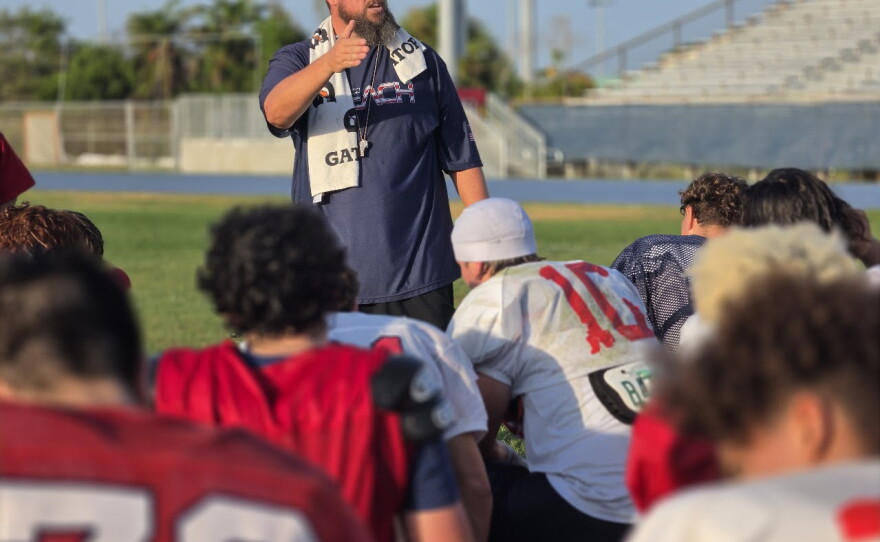
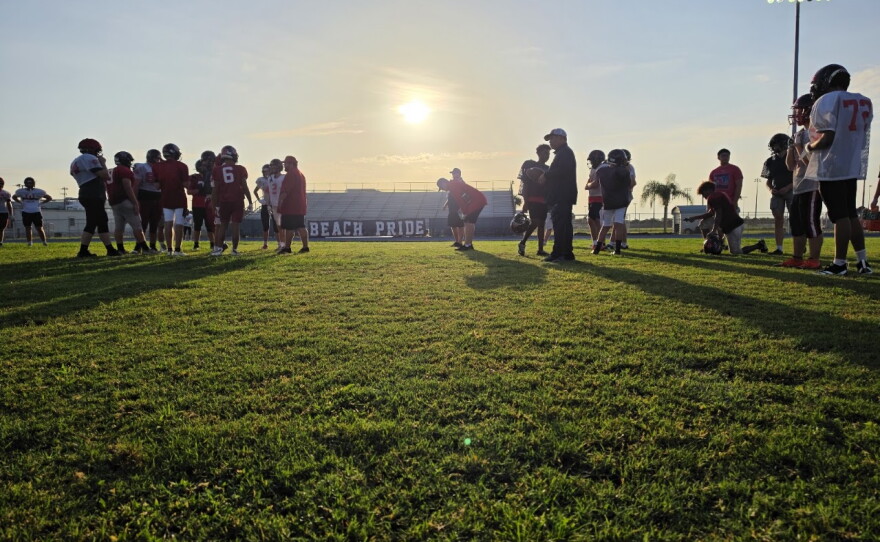


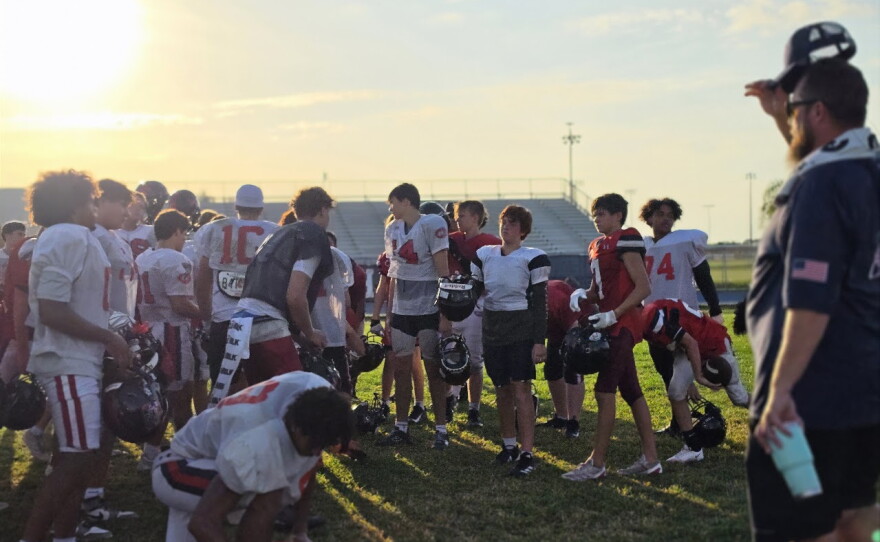
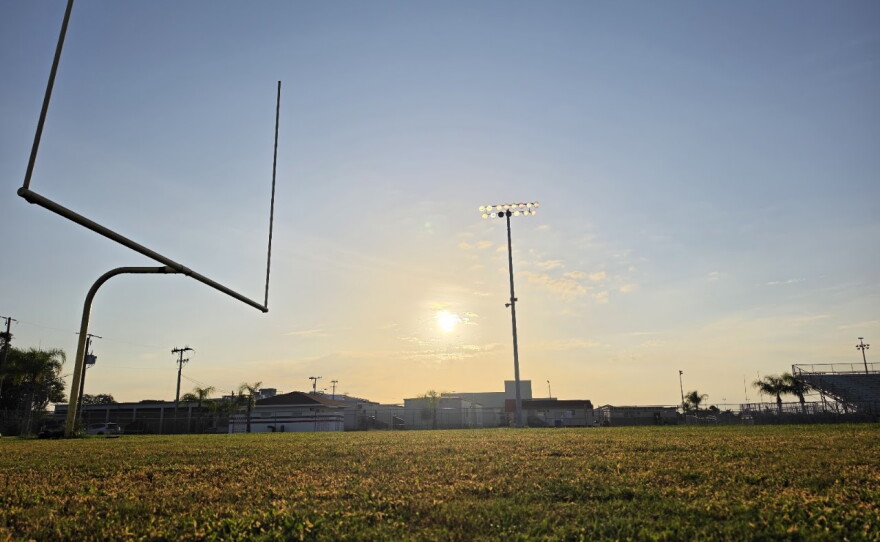
With the heat, dark skies and stadium lights have become common for more than just Friday night football. In fact, that’s the scene for Tuesday morning practice as the Minutemen have adjusted their practice schedule and are up working before the hot sun can take its toll.
The National Weather Service has issued 21 heat advisories this summer, meaning the feels-like temperatures have hit 108 degrees or above. The record of 25 heat advisories was set back in 2023. It’s unsafe for anyone to be outside for too long with those temperatures, especially kids. Their small bodies have a hard time dissipating heat, said Dr. Kevin Farmer, Chief of Sports Medicine at the University of Florida Department of Orthopaedic Surgery.
“One of the ways we dissipate heat is through surface area, and so a smaller kid has less surface area and less ability for the body through homeostasis and metabolic controls to help dissipate the heat,” Farmer said.
So to be safe, the team now has early morning practice twice a week – a tactic that’s become much more common among teams across the state.

“A lot of the schools are having to make changes. And I hope that the coaches realize that across the state this is going on, and everyone's having to make very similar changes,” Farmer said.
Farmer said that August is typically when they see more young athletes in the emergency room as fall camps get into full swing and summer heat lingers.
But the 2026 summer has been one for the history books. July was the hottest month ever recorded in the contiguous United States, according to the National Oceanic and Atmospheric Administration.
In Brevard County, home of the Minutemen, summer temperatures were above average in July and August. The latter in particular was measured as much hotter.

August’s average maximum temperature (the hottest reading of a single day) was 9 degrees hotter than the yearly maximum average (89.3 degrees), according to the National Weather Service.
The combination of heat, humidity, direct sunlight and air movement drove the Minutemen to start practicing before the crack of dawn.
“It's a little different, but I really like it,” said sophomore and defensive tight end Graham Kimmey, Coach Kimmey’s son.
Graham used to wake up at 7:30 a.m. Now, on early training days, he and his teammates wake up at 5 a.m. Practice starts at 6. Sometimes 6:30 a.m. Although an adjustment, Graham has enjoyed catching rides with teammates and bonding over the shared chore of waking up so early. He said if they can make it through 6 a.m. practice before school, they can do anything.

“If we can do that, we can come to any practice,” Graham said.
In June, Graham was at a training camp at Webber University, south of Lake Wales, seven practices over 3 days. It was also during a heat wave, Coach Kimmey said.
“I think the heat index was 110 degrees,” he said.
Graham made sure to drink a lot of water. The problem was… he only drank water. He hadn’t eaten. Drinking so much water lessened his appetite.
After three practices and the scorching heat, Graham felt faint. He began throwing up.
“I started cramping everywhere. Had to go to the trainer. I started full-body cramping, and then I had to go to the hospital and get fluids put in me,” he said.

Two IV bags later, Graham was OK. But the incident was a scary reminder of what the heat can do without proper precautions, Coach Kimmey said.
“It was one of the biggest wake-up calls that I've had personally, obviously professionally, too, because regardless of whether it's my son or not, it's one of our players,” he said.
Kimmey says it was a case of heat stress, but he did exhibit some symptoms of heat exhaustion, nausea, and almost fainting. While the camp was about 2 hours from home, Brevard County has had a hard summer of heat-related incidents.
County data show that Brevard had the largest jump in heat-exposure-related emergency calls in Central Florida, with 11 reported in June and 41 in July. Although in August those incidents fell to 29, four were heat stroke-related.
If the heat continues, Coach Kimmey says they’ll continue doing morning practice. Currently, the team still practices in the heat twice a week.
It’s a balancing act; he needs them to work in the heat when they can. After all, game days will likely be hot.
“We play our games in the evenings in Florida. You feel that kind of little pull that says, ‘I still want them to feel that afternoon/evening kind of humidity and temperature,” Kimmey said.

That’s where team athletic trainer Johnny Morales comes in. Monitoring heat, humidity, direct sunlight, and air movement conditions, Morales advises Coach Kimmey on adjustments the team may need to make, like when the team can suit up fully with pads and helmets based on regulations from the Florida High School Athletic Association.
The first two weeks of August had multiple “red practices,” which means the readings were too unsafe to be fully padded
“It's just helmet only, one hour tops, and they have four rest breaks for the hour. And so it's just been limited practices,” Morales said.
The team has ice tubs and water stations at the ready. Morales also pre-plans electrolyte-heavy hydration recipes.
“My regimen with the kids was Gatorade a lot during preseason and in that first week, and then I wean them off as the temperature goes down,” he said.

The plan is to return to a regular-after school schedule in September. That is, if the heat calms down.
“I'm an afternoon guy. I'm not a morning person,” Morales said, hoping for a cooler September.
According to NOAA predictions, both September and October are forecast for above-normal temperatures.
“It feels like it gets hotter as each summer goes,” Kimmey said. The last few years in particular have been really hot, and the heat lasts longer into the year, he said. “Rarely does it get to the point in October still where you feel like you're comfortable to go in the afternoons yet.”
In the meantime, Coach Kimmey is not only focused on keeping the kids safe, but also advancing the Minutemen’s record by another win this week.
“We’re 2-0, which is great,” he said. “But there’s more to do.”