

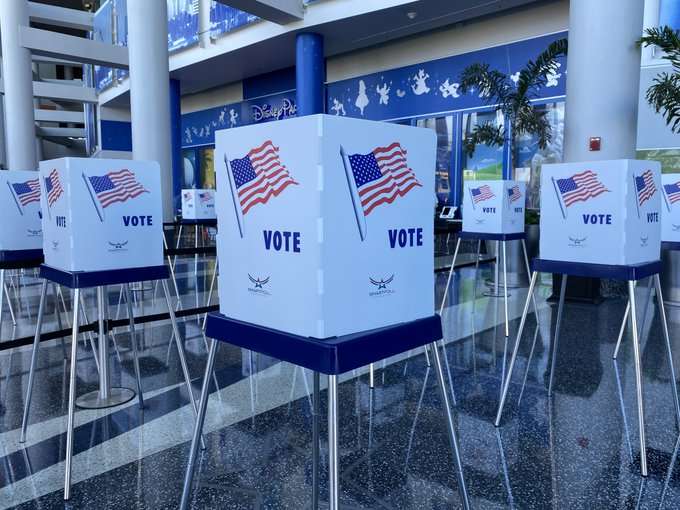
Primary Election: A primary election is an election for the purpose of nominating a party nominee to be voted for in the general election to fill a national, state, county, or district office.
General Election: A general election is an election to determine who takes office for the national, state, county, or district office.
Special Election: A special election is an election called by the Governor of Florida for the purpose of electing a party nominee to be voted on in a general or special general election.
Presidential Preference Primary Election: The Presidential Preference Primary is an election for the purpose of nominating a party nominee for President of the United States.
Florida's Closed Primary System
Florida is a closed primary state, which means that only voters who are registered members of a political party may vote for their respective party's candidates in a primary election.
Voters without party affiliation are not eligible to vote for party candidates in a primary election. The exception to this is the Universal Primary Contest.
- Jack is a registered republican. Jack's ballot will include Republican seats, non-partisan seats, and any local initiatives or constitutional amendments.
- Jill is a registered democrat. Jill's ballot will have Democratic seats, non-partisan seats, and any local initiatives or constitutional amendments.
- Alice is registered without a party affiliation. Alice's ballot will have only non-partisan seats, and any local initiatives or constitutional amendments.
- Richard is registered with a minor party. Richard’s ballot will have non-partisan seats, and any local initiatives or constitutional amendments., unless his registered minor party has two candidates running for a partisan seat.
- Non-partisan judicial, non-partisan school board offices, non-partisan special districts, and municipal and local referenda questions are included in some primary elections. All registered voters, including those without party affiliation are entitled to receive and vote these ballots.
Universal Primary Contest
In a primary election, if a partisan race has candidates from only one party and no opponent will appear on the general election ballot, it becomes a Universal Primary Contest. This means all registered voters in Central Florida, regardless of party affiliation, may vote in that primary for that office. The candidate receiving the most votes wins outright and will not appear on the general election ballot.
Example:
Qualified Candidate A -- DEM
Qualified Candidate B -- DEM
(No other candidates qualified; no general election opposition.)
All voters, regardless of party registration, will decide that contest in the primary.
Non-Partisan Offices
After qualifying ends, non-partisan offices are assigned to either the primary or general election ballot.
School board and judicial offices are the only non-partisan races that always appear on the primary ballot when two or more candidates qualify. If one candidate receives more than 50% of the vote, they win outright. If no candidate clears that threshold, the top two advance to the general election.