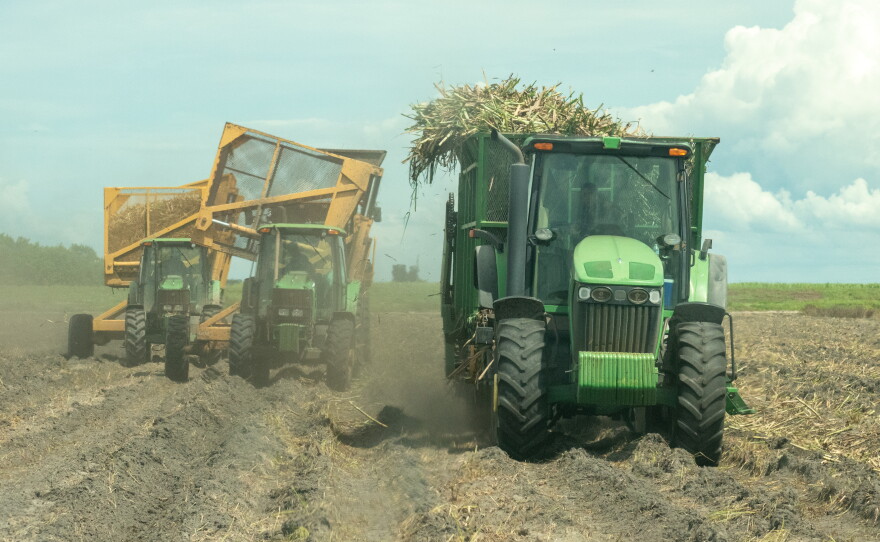
Even from inside the cab of Carl Perry’s truck, the brown sugar cane shoots are impressively tall.
“It's supposed to be green,” Perry explains. “That's from the mealybug.”
Carl is the patriarch of the Perry family farm in Glades County. His family has been cultivating this crop for five generations.
This farm, near Moore Haven, is in the same congressional district as Orlando International Airport, nearly 120 miles to the north.
The difference couldn't be starker. Glades County is home to barely 12,000 people as of the 2020 Census.
“We all stick together and really help each other out, especially if there's ever a need for something like a natural disaster,” says Amy Ridgedale, Perry’s daughter. She and her husband work on the farm, too.

Lately, life has been hard for them. Earlier this year, a cold snap ruined large swaths of sugar cane on their farm. The cane grows over the course of several years, which means they can’t just plant more to make up for the loss.
And this summer, invasive mealybugs began spreading to Florida, ruining grasses like their sugar cane and those on which the cattle graze.
“This little character is eating the mess out of both of them,” Ronda Perry, Carl’s wife, explains. “And it's a new challenge to figure out what we can do to get rid of this pest.”
Carl Perry adds: “This thing came in in June, and already now in August, … we're going to be 30% less of a crop this year.”
The Perrys describe themselves as “pretty conservative,” though Ronda Perry says that “Democrats seem to help farmers more than Republicans have in the past. “
For Ridgedale, faith is “the most important thing when I’m looking for a candidate:” someone “who is not afraid to tell people that they put God first. Because myself and our family, we put God first, and we know that at the end of the day, if we trust in God, that He has our best interests. And so for a candidate to have that same moral and faith in God is very important to me, because then that means that they’ll make the best decisions for the people in our area.”
But the biggest challenge Carl Perry says they face is the lack of attention they get from lawmakers. Glades is the fourth least-populous county in Florida — so small that there aren't any proper grocery stores in the county itself.
That means that in campaign season, they often get passed over in favor of counties with more voters.

People here want to elect someone who understands farmers and the challenges they face, from production regulations to import policy, transportation and pest management.
“If you want to learn about us, we're okay with teaching you,” Amy Ridgedale says. “Because we love what we do, and we want people to understand what we do, because we have to feed America, and we want you to be fed and happy.”
Of all the voters I spoke to on this road trip, few were familiar with their current representative or with Darren Soto, whether inside the former district or not.
But the Perry clan, and many voters in Okeechobee County, are familiar with Ben Butler, a fifth-generation farmer in Okeechobee who failed to win in the Republican primary.
“We knew Ben Butler,” Ronda Perry says. “We knew what he stood for. We knew that he, not just had the backs of the farmers, but the whole area.”
Later in the day, while driving me through his fields, Perry reflects on the challenges of this new district.
“It's got to be hard for the congressman too, because he's got so many different things pulling against him now,” Perry says. “I'm sure our needs are much different than the urban areas.”
Darren Soto, the incumbent Democrat for Florida’s Ninth congressional district, has been representing citrus and cattle farmers in South Osceola County since he was elected in 2016.
In April, he was one of 14 Democrats who broke with the party to vote for the GOP-drafted federal Farm Bill. And he’s been endorsed by the National Cattlemen’s Beef Association and Florida Citrus Mutual.
Republican Dan Green has yet to make detailed campaign statements about agriculture online. He has not responded to Central Florida Public Media’s repeated requests for an interview for this story directly, as well as via campaign staff and volunteers.
But earlier this month, Florida Agricultural Commissioner Wilton Simpson, who is also a Republican, endorsed him. He also got the endorsement of Ben Butler.
Highlands County
After parting with Perry, I head north for about 45 miles, sun drawing low, to Highlands County, the last of the new counties in the district. It's agricultural, too — there are plenty of citrus saplings lining the highway — but bigger and more populous than Okeechobee or Glades counties.
“Between us and the coasts or the Orlando area, there's pretty much not a whole lot besides cows and orange trees,” says Kim Piesik, the president of the Sebring Historical Society. “And now it's more and more housing developments.”
Sebring, the county seat, is probably best known for the motor raceway that attracts thousands of spectators and tourists every spring. It's situated on Lake Jackson.
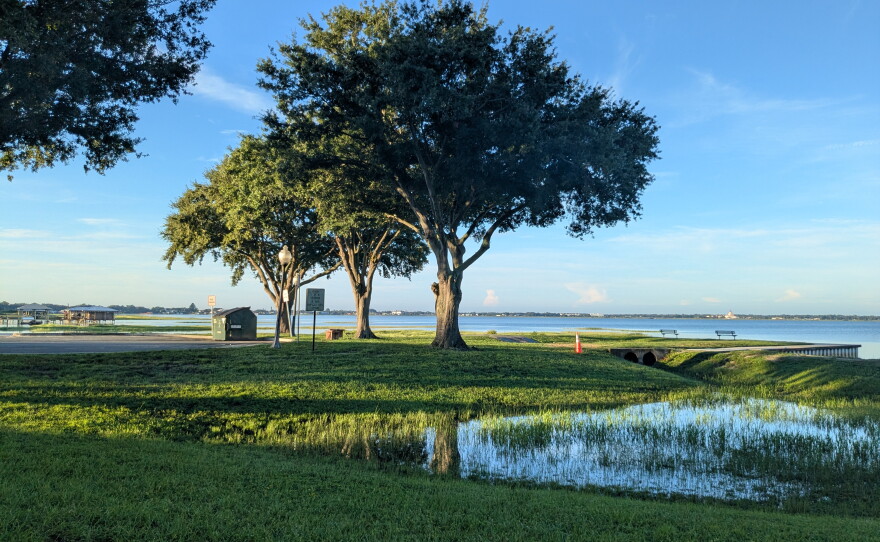
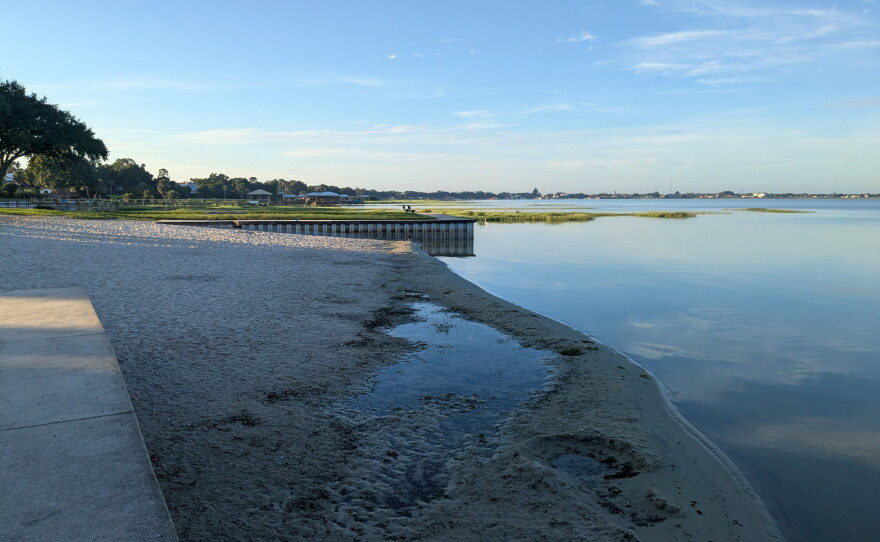
Arriving in Sebring in the evening, one thing stands out. Almost nothing is open past 9 p.m.
This is not a fluke. Retirees make up more of the county's senior population than any other county in Florida.
“The fall colors down here are the colors of the license plates of all the retirees coming down — the snowbirds,” Piesik says. “Our community, it's probably 80% transplants: … Michigan, Ohio, and Indiana primarily, but we've got folks from all over.”
Many of them moved from rural communities in the Midwest looking for a similar small-town feel without the cold winters.
Piesik is one of those transplants, moving here from Michigan about 10 years ago.
"They call it God's waiting room,” she says, with a laugh.
That’s evident the next morning when visiting a few local diners. Young folks are hard to find, and most of the ones I talk to complain about finding people their own age to hang with.
Politically, it's also tremendously red. Highlands County voted for Donald Trump in 2024 by nearly 40 percentage points. And Piesik says the former city manager for Avon Park, Danielle Kelly, specifically chose the area because she was looking for "the reddest county in the reddest state."
Nowhere is that more apparent than a few minutes north, at the Wild Turkey Tavern in Avon Park. The fryers and grills behind the bar are bedecked in crass, decidedly conservative bumper stickers, most of which can’t be quoted verbatim in this story. The ceiling is plastered with flags from a mix of sports teams and multiple Confederate flags.
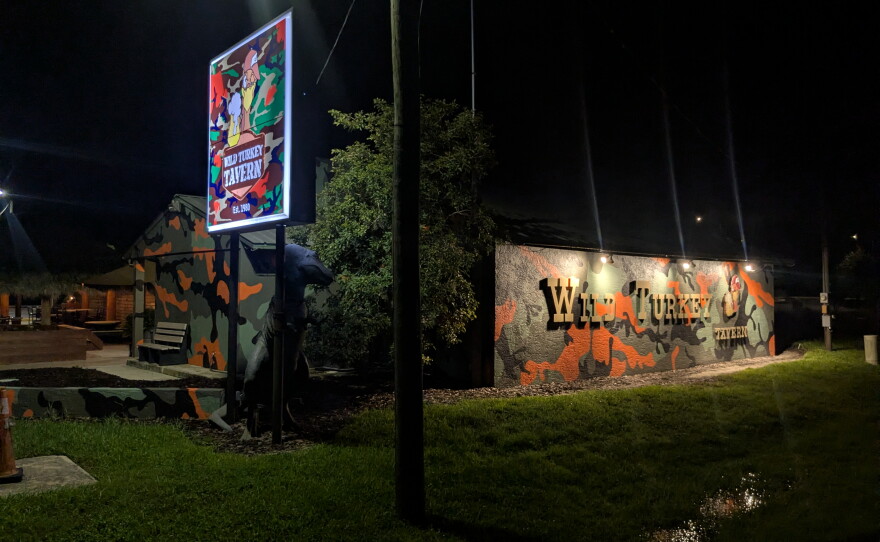
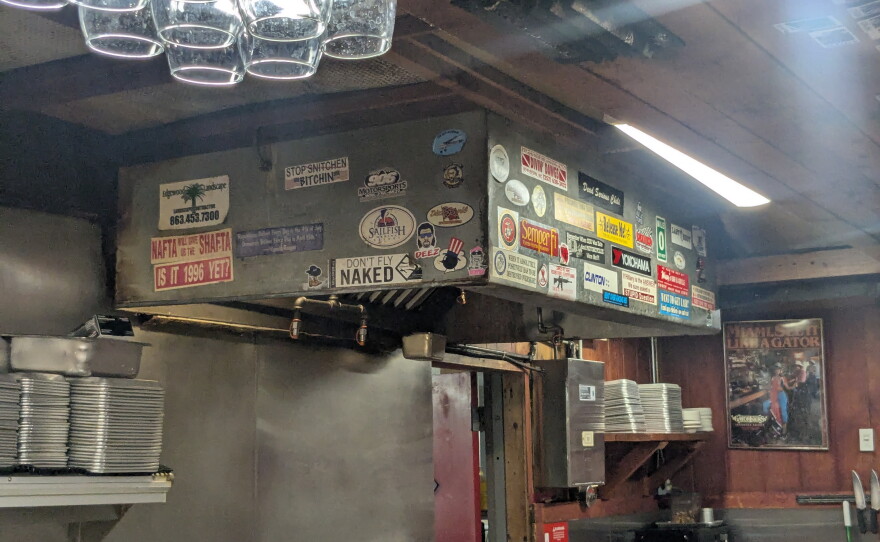
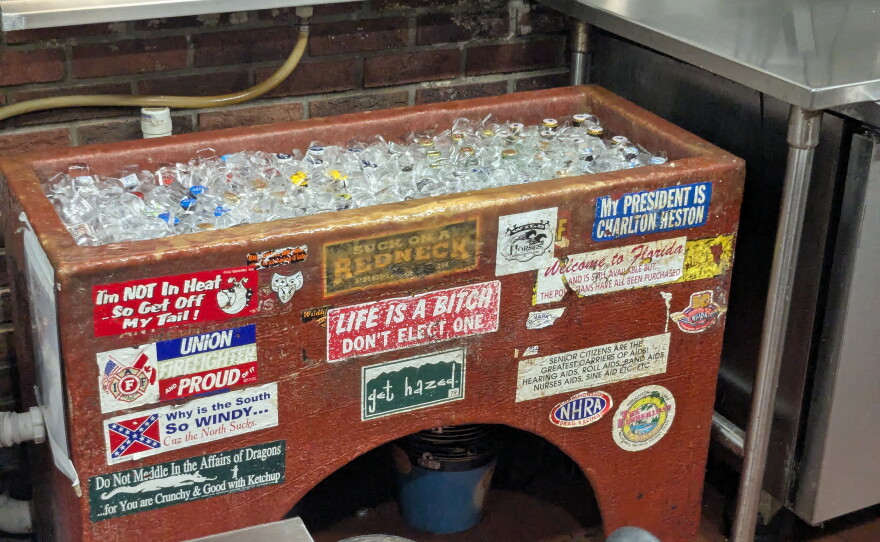
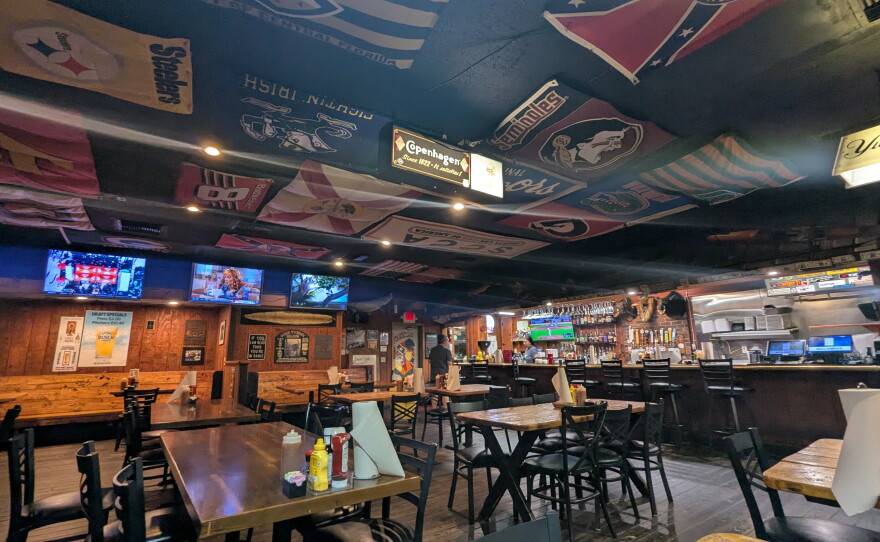
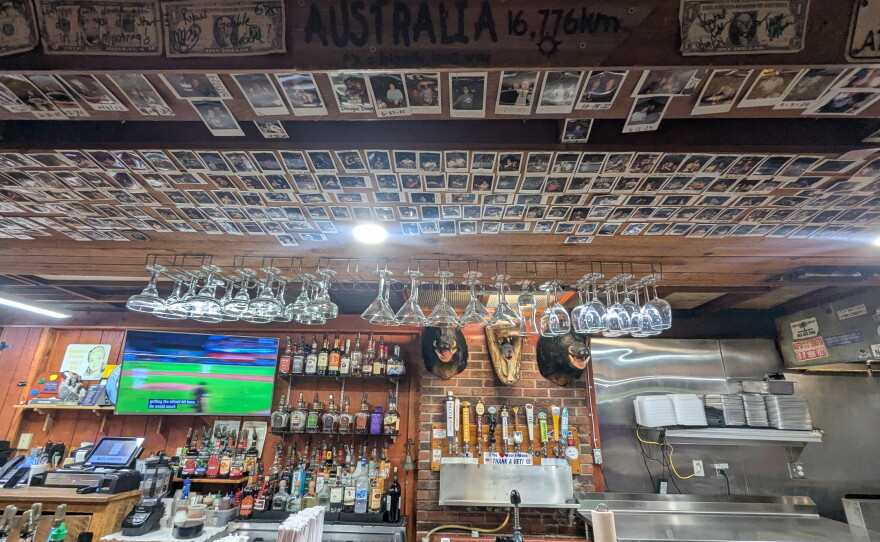
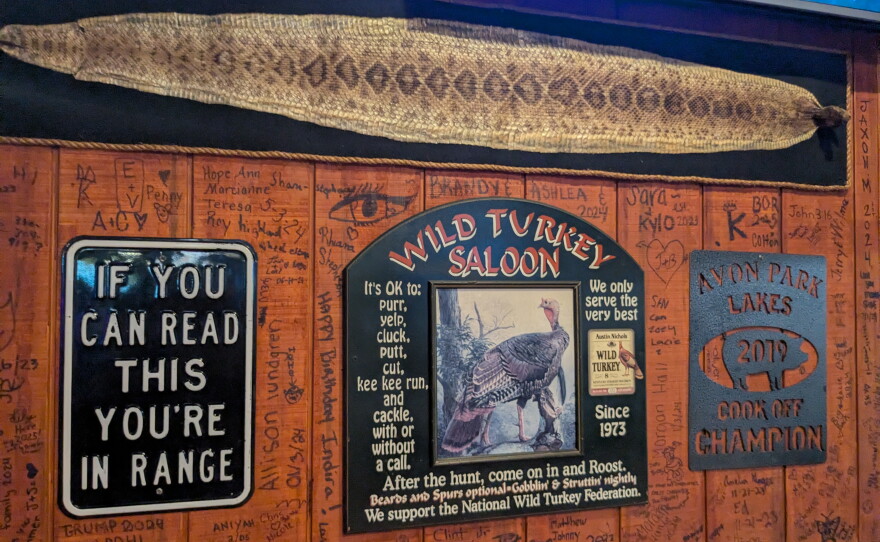
That conservatism also crops up in conversations with residents. Many express dismay about the state of the world and anxiety about what they believe to be widespread imposition of Sharia law in the U.S. by Democrats and transgender participation in youth sports.
The City on the Circle
Circle Park is one of Sebring's defining features. Just a handful of other cities in the country were built in this centrally-developed way, with its main streets extending radially out from the park.

A point of pride — and some anxiety — for Sebring locals is the recent renovation of the park in partnership with HGTV. Now, it’s adorned with french-style cafe tables, hedges, shaded tables, a sculpture and a pair of permanent cornhole boards made of stone.
Some worry whether the improvements will attract too much growth, ruining the community's small-town feel.

That’s where I find a trio of retirees holding their weekly prayer meeting. They, too, are transplants from up north.

Neina Ryan married her husband here a half-century ago. They moved back down to Sebring from New York 37 years later.
“I have no complaints at all, honestly,” Ryan says. “God is good, like they said, and He provides everything we need.”
Marsha Nowels is a transplant from Iowa. She agrees with Ryan, and said she likes to stay in Highlands County.
“We're not Disney goers — I told my grandchildren, I'm sorry, but again, it's got a little bit woke,” she says, to murmurs of agreement.
Nowels is referring to Disney’s policy about four years ago to greet visitors in gender-neutral language in a bid to be more inclusive.
The prayer group all identify as Republicans. They aren’t aware of the redistricting, but know how they’ll be voting.
“I think in all fairness that, at this point, … even if we don't know what they stand for, we're going to vote the party that we support,” says Ryan.
North by Northeast
By mid-afternoon I depart north, through Polk County, for Kissimmee, which is in Osceola County. It’s still the epicenter of the district in terms of population, if not geography.
Kissimmee is home to a growing Hispanic community, predominantly from Puerto Rico, but with substantial communities from Venezuela, the Dominican Republic, Mexico, Haiti and the Brazilian population is growing fast.
Kissimmee's downtown is anchored along Broadway Street and its expansive park along Lake Toho.

Standing on the corner of Broadway, Kissimmee feels at home with many of the downtowns in this district. Of course, the traffic is emblematic of a community that has exploded in the past decade and a state defined by sprawl. Even outside of rush hour, it can be frustratingly slow.
For Rosangelie Welke, it’s also home.
“That's one of the biggest things I love about Kissimmee is that it's just a big pool. There's so many different people. It's so diverse,” says Welke.
Welke is Puerto Rican, but she grew up in Kissimmee. She moved back here a few months ago with her kids and her girlfriend, Taylor Davis, after living in Virginia and Washington state.

They’re thinking about the world they want for their kids when they vote. Welke says she’s concerned by the adoption of Florida’s so-called “don’t say gay” policy in public schools, especially as someone who’s queer.
She’s also troubled by the state and federal efforts to subsidize private schools and bring religion into education.
Davis, who isn’t religious, went to Liberty University, the conservative evangelical Virginia school founded by televangelist Jerry Falwell in 1971. It made her education uncomfortable.
“It was just — it [felt] like you were trying to fabricate a story every time you talk, or every time you write a paper,” Davis says. “I agree that religion should at least be separated from things such as politics and school. You can incorporate it into your beliefs, and I think that's perfectly fine. But obviously, not every child is going to be Christian, and not every child is going to be Catholic or Muslim.”

Welke agrees, observing a fault line over faith in her own family.
“I think it's so crazy that some people, like my mom, won't vote for someone if they're atheist,” she says. “That's the only reason she voted for the president, was because he goes to church, he’s a godly man. And I'm just like, ‘But that's not that's not what we're voting for here. We're voting for what they're offering, what they're trying to change, what they're trying to enact.’”
Other voters in Kissimmee say affordability is a top concern, and want to foster a more welcoming business climate.

Many more of them are familiar with Soto, whose campaign sign features an orange Coquí, a tree frog common in Puerto Rico that’s an unofficial symbol of the territory. Soto’s father is Puerto Rican.
Welke just turned 30, but says she’s never voted before. She and Davis say their friends usually vote for Democrats.
“This might just be the year I vote,” she says. “Because I want my kids to grow up in the free environment that we are promised when you come to America. I don't want them to grow up and then it ends up going back to, you know, Jim Crow era type thing.”
Welke isn’t alone in that fear. Earlier this year, after the Florida Supreme Court allowed the new district map to move forward, after the U.S. Supreme Court struck down key protections in the Voting Rights Act, civil rights groups and lawmakers across the country raised concerns about similar policy reversals under the conservative-dominated court.
National stakes
To critics, those are the stakes of this election: not just the loss of a seat in the U.S. House of Representatives, but of self-determination for the Hispanic community in Central Florida, in a state with a long history of gerrymandering.
To Republicans, this race could help the party hang onto a majority in the House and advance President Donald Trump’s policy agenda for two more years.
Even if Soto hangs onto his seat this year, the new map stacks the odds against Democrats in 2028 and 2030.
“The map that Florida drew [this year] is not a map to win the 2026 election,” Rollins College political science professor Patrick Rickert explains. “It's a map that's really going to look good for Republicans on average across a general election.”
Come November, it will be up to the voters to decide what happens next.
About this project
Dispatches from the Ninth Congressional District is a four-part series exploring what potential voters throughout the newly redrawn and expanded area are looking for in the next person they elect to represent them in Congress. The district was redrawn to include more white Republican voters after President Trump urged red states to redistrict to try and hang onto power as midterm elections approached.